











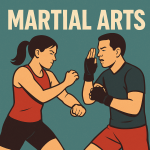



The Science of Speed: Enhancing Your Fighting Reflexes
As a lifelong martial artist and self-defense coach, I’ve come to appreciate speed not merely as the ability to move quickly but as the grace of timing, awareness, and adaptability. Reflecting on my own journey, I often think of Bruce Lee’s philosophy — a compelling blend of introspection and action. Speed, particularly in the realm of fighting, is more than a result of physical prowess; it’s a mental game, too, rooted deeply in discipline and mindful practice. Let’s explore actionable steps to enhance your fighting reflexes and, with them, your sense of self-mastery.
The Mind-Body Connection
Before diving into practical techniques, it’s essential to understand that speed in martial arts isn’t only about rapid movements. It begins with clearing your mind and sharpening your focus. When I train, the first thing I do is meditate for a few minutes. This simple practice allows me to center myself, creating a mental state ripe for learning and growth.
- Action Step: Dedicate five minutes daily to mindfulness meditation. Use this time to focus on your breath and visualize executing your movements with fluidity and precision.
This clarity carries over into your physical practice. When distractions dissolve, reflexes flourish. You’ll react not just with your body, but with your entire being.
Drilling for Reflexes
While meditative practices enhance mental acuity, physical drills sharpen your reflexes. One of the most effective methods I’ve implemented in my training is the use of “reactive drills.” These drills focus on quick decision-making within a controlled environment.
- Action Step: Pair up with a partner and practice “reactive sparring.” Have your partner signal attacks in random patterns, forcing you to react instantly. The key is to respond rather than overthink. This builds muscle memory and instinctive responses.
Sound simple? It is. Yet simplicity is often the gateway to mastery. You’ll find that as you engage in these drills, your mind becomes less cluttered, allowing for faster, more adaptive responses when needed.
Utilizing Visual Cues
Many people don’t realize that refining your ability to perceive movement can greatly enhance your speed. I often relate this to how a predator stalks its prey. The most adept hunters aren’t merely fast; they possess an acute awareness of their surroundings.
- Action Step: Incorporate vision training into your routine. Practice focusing on an object while moving. You might bounce a ball against a wall and try to catch it as it returns. The more you train your eyes to track motion, the quicker you’ll become at anticipating your opponent’s moves.
Being conscious of your environment allows you to react more naturally. This kind of adaptability is crucial not only in martial arts but in everyday life, whether you’re navigating personal relationships or professional challenges.
Confidence Through Mastery
Training your reflexes undoubtedly leads to quicker movement, yet the true beauty lies in the confidence that comes with mastery. When I first stepped onto the mat, my speed was lacking, my nerves often got the better of me. However, as my skills progressed, so did my confidence, fueling my desire to improve.
- Action Step: Set small, measurable goals during your training sessions. Celebrate each milestone, whether it’s perfecting a technique or successfully landing a more complex combination. Each achievement reinforces your belief in your abilities, making you quicker in both body and mind.
This process of self-improvement is deeply personal and transformative. As your confidence grows, so does your capacity to adapt to challenges, both in and out of the dojo.
Cultivating Fluid Adaptability
One of the most profound lessons I’ve absorbed in my journey is the importance of fluidity — both in movement and mindset. Lee famously noted that it’s best to be like water. Water adapts, flowing to fit its container and changing course as needed.
- Action Step: Embrace the idea of adaptability in your training. Experiment with different styles and techniques, or even train in a new martial art. Each new experience can teach you something about your body and how it responds.
This adaptability becomes ingrained over time. When you encounter obstacles, whether in training or life, you naturally find a way to navigate through them. This fluidity is arguably your most potent tool as a martial artist.
A Final Thought
As I reflect on these principles, I’m reminded that enhancing your fighting reflexes is as much about self-discovery as it is about physical prowess. Each moment of practice invites you to grow, adapt, and evolve.
As Bruce Lee once said, “Knowing is not enough; we must apply. Wishing is not enough; we must do.” Your journey into speed and reflex is not just about fighting; it’s about learning how to engage with the world more fully, to confront challenges with grace and tenacity.
If you find resonance in this message and wish to deepen your self-defense training, I invite you to connect with me on Instagram @KSteineman. Together, we can foster your growth through personalized guidance tailored to your unique journey. Let’s embark on this path of self-mastery and resilience, one reflex at a time.
You might also like


More from MMA (Mixed Martial Arts)
Empower Yourself: The Benefits of Learning Self-Defense
Empower Yourself: The Benefits of Learning Self-Defense There's a powerful truth that resonates through the ages: the journey of self-discovery often …

Is Your Instructor the Real Deal? 10 Signs of a Good Martial Artist
Is Your Instructor the Real Deal? 10 Signs of a Good Martial Artist When stepping onto the mat, whether you’re a …

The Top 5 Self-Defense Skills to Protect Yourself Effectively
The Top 5 Self-Defense Skills to Protect Yourself Effectively Hello, my fellow martial arts enthusiasts and seekers of self-mastery. My name …