Popular Posts
- Yoga for Senior Citizens: Improving Cardiovascular...
 1April 4, 2023
 - 10 essential core exercises for seniors
 2April 2, 2023
 - Tips for Aging with Grace and Style
 3March 2, 2023



What is MMA (Mixed Martial Arts)
and how did it all start?
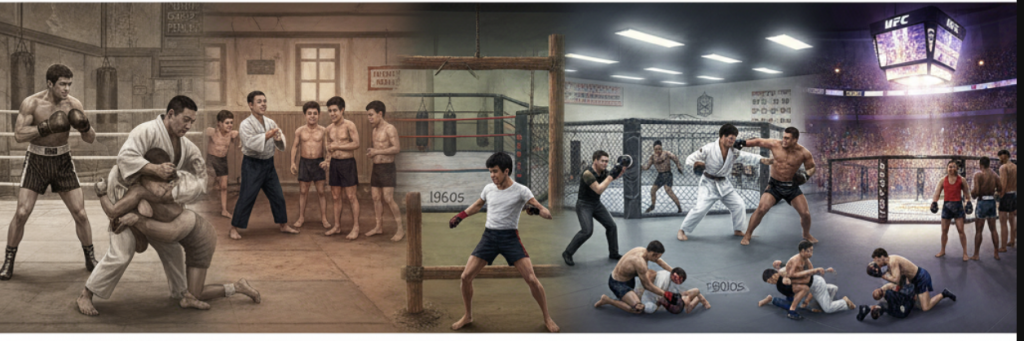
Mixed martial arts did not emerge suddenly as a modern spectacle; rather, it represents the latest chapter in a long historical experiment: determining which fighting methods are most effective under pressure. Over the past one hundred years, and especially during the last twenty, MMA has evolved from loosely organized contests into a regulated, global sport.
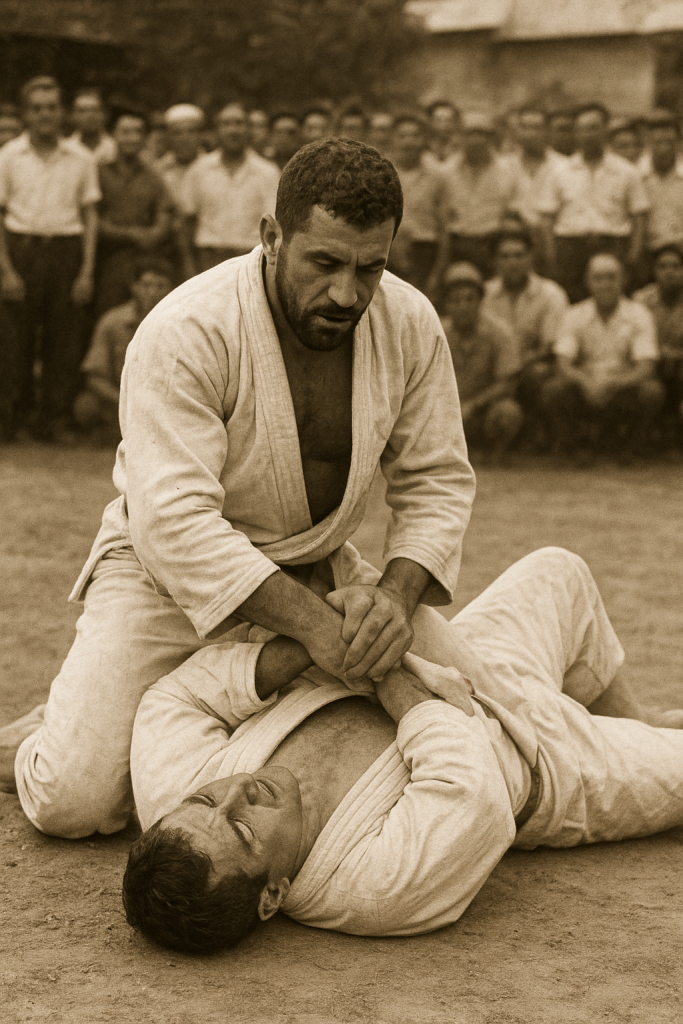
In the early 20th century, “mixed style” bouts were already taking place across the world. Catch wrestlers faced boxers in Europe, judoka challenged strikers in Japan, and Brazilian jiu-jitsu practitioners tested their grappling against anyone willing to step forward. In Brazil, the Gracie family popularized Vale Tudo—“anything goes” matches—during the 1920s through the 1950s. These events emphasized real-world effectiveness, minimal rules, and the idea that technique could overcome size and strength. Similar experiments occurred in Japan, where professional wrestling blurred into legitimate competition, planting the seeds for later hybrid combat sports.
The late 20th century marked a turning point. In 1993, the first Ultimate Fighting Championship was held in the United States. Marketed as a no-rules tournament, it shocked audiences by pitting fighters of vastly different styles against one another. Early UFC events demonstrated a critical truth: single-discipline fighters were vulnerable. Grapplers exposed strikers with limited ground defense, while wrestlers neutralized pure submission specialists through control and positioning. The message was clear—fighters needed to adapt or be left behind.
How Has Mixed Martial Arts (MMA) Changed
over the last 20 years?
Regulation and refinement followed. Throughout the late 1990s and early 2000s, MMA faced political resistance and public criticism, often labeled as excessively violent. To survive, the sport adopted weight classes, time limits, medical oversight, and the Unified Rules of Mixed Martial Arts. These changes legitimized competition and made athlete safety a priority, allowing MMA to gain sanctioning from athletic commissions and expand into mainstream acceptance.
The last 20 years represent MMA’s true maturation. Fighters no longer identified strictly as boxers, wrestlers, or jiu-jitsu specialists. Instead, a new archetype emerged: the well-rounded mixed martial artist. Training camps integrated striking, clinch work, wrestling, submissions, strength and conditioning, and sports science. Strategy became as important as toughness. Fighters studied opponents, managed energy systems, and refined footwork and distance with precision previously unseen.
What can spectators and practitioners of MMA expect to see change
in the sport over the next 20 years?
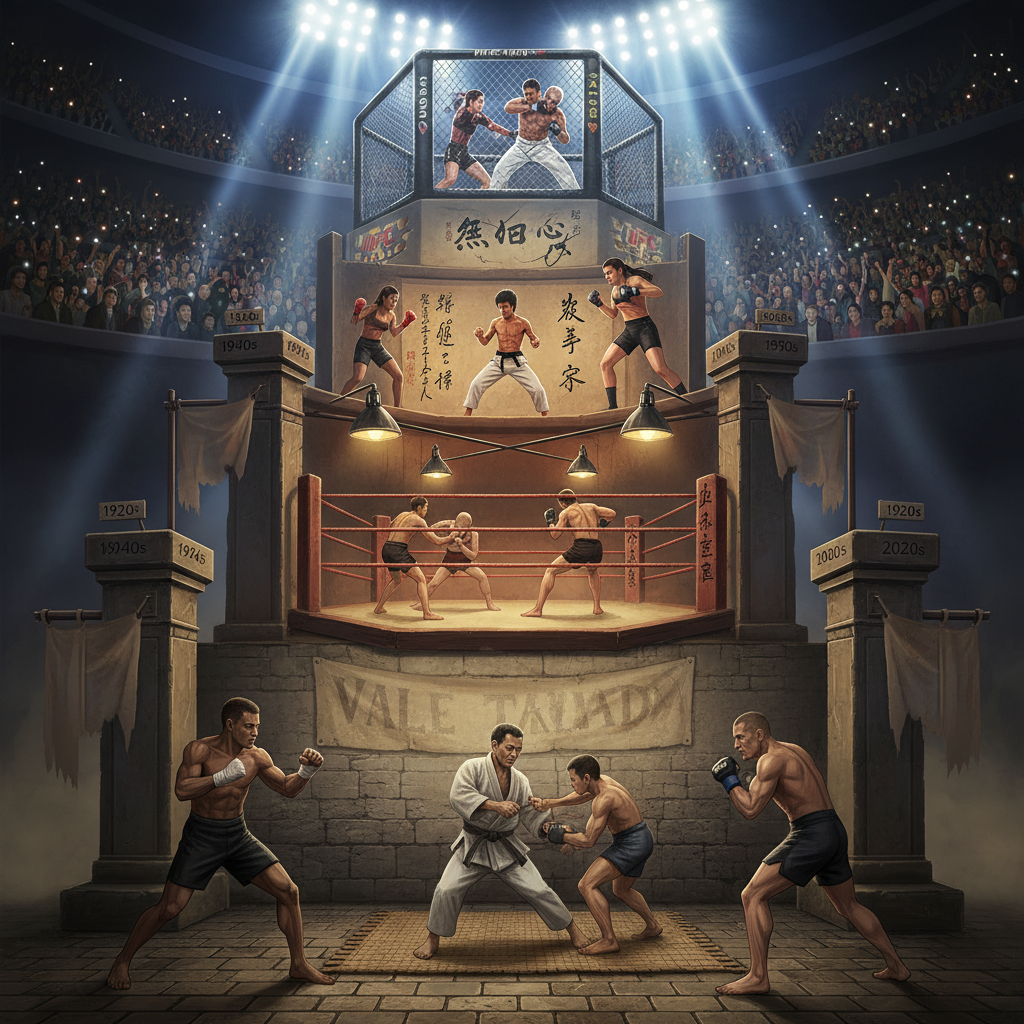
Globalization accelerated this evolution. Promotions expanded into Europe, Asia, Africa, and Latin America, drawing talent from diverse martial traditions. Women’s MMA rose to prominence, redefining perceptions of combat sports and producing technically elite athletes. Media coverage, digital platforms, and performance analytics further professionalized the sport.
Today, mixed martial arts stands as a synthesis of centuries-old fighting systems and modern athletic innovation. What began as style-versus-style experimentation has become a disciplined, highly technical sport. The past hundred years reveal a continuous pursuit of effectiveness; the last twenty show refinement, professionalism, and respect. MMA’s history is not just about fighting—it is about adaptation, evolution, and the relentless testing of what truly works.
It’s best to contact a Self-defense instructor to get trained as soon as you can! Later, you can develop this skills of MMA and enjoy the passions of its many practitioners.

In the modern era, self-defense has benefited enormously from the professionalization of MMA over the last 20 years. Today’s training methods emphasize functional striking, takedown awareness, ground control, and escape skills—precisely the competencies most relevant to real-world encounters. Conditioning and stress inoculation, once informal, are now deliberate components of training. This allows practitioners to operate under fatigue and anxiety, which mirrors the physiological realities of violence.
Where self-defense diverges from sport MMA is in priorities and constraints. The goal is not to win rounds or submissions, but to create opportunities to disengage, escape, or protect oneself and others. Awareness, boundary setting, and avoidance become as important as physical technique. MMA provides the mechanical tools; self-defense provides the decision-making framework for when and how to use them responsibly.
In essence, learning self-defense is the logical extension of MMA’s evolution. MMA answers the question, “What works in a fight?” Self-defense refines that answer to, “What works when it matters most, with the least risk and the clearest exit?” When trained correctly, self-defense becomes not just a set of techniques, but a mindset shaped by decades of tested, pressure-proven knowledge.

Please authorize with your Instagram account here
Browse
News collects all the stories you want to read
-
 Emotional Intelligence
 -
 Health and Fitness Tips and Advise for people 50+
 -
 Leadership
 -
 LIVE and Trending Now
 -
 Love & Lifestyle
 -
 Meditation
 -
 Mindfulness
 -
 MMA (Mixed Martial Arts)
 -
 Pillars of Wealth
-

If you're reading this, it seems we have some more articles to write! We hope you're enjoying our site and wishing you health and prosperity wherever your journey's take you. Feel free and connect with us on one of the social networks we're on!
Recent Posts
- The Best Responses for When Someone Grabs You from...
 February 28, 2026
 - Understanding Annuities: Your Key to Retirement Security
 February 28, 2026